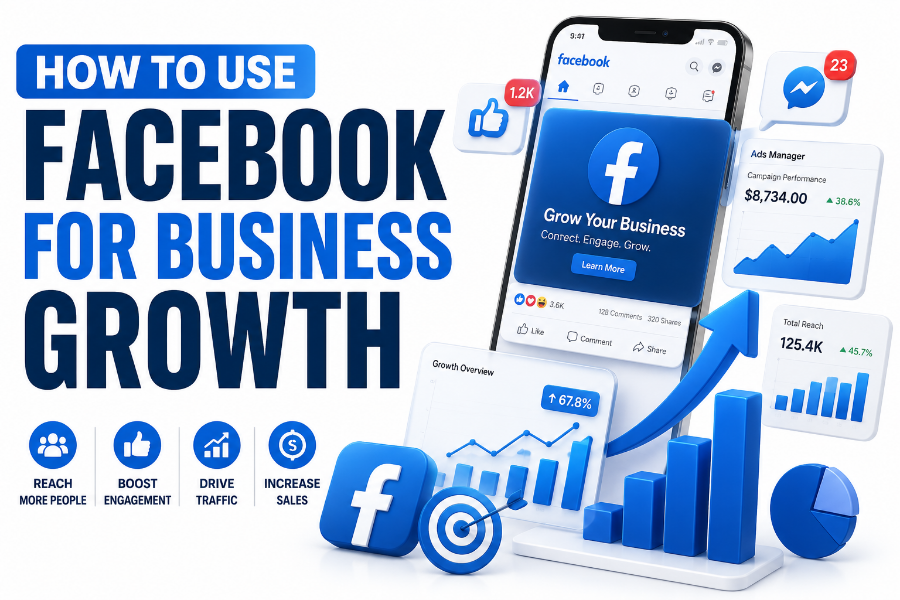
Facebook remains a practical business channel because it combines content publishing, community interaction, customer messaging, and paid promotion within one platform. Companies can use these features to introduce their brand, answer questions, build familiarity, and guide interested people toward useful products or services.
Learning how to use Facebook for business growth begins with a clear plan rather than frequent posting without direction. Every page update, video, comment, advertisement, and message should support a defined audience need and a measurable business outcome, such as awareness, inquiries, leads, or sales.
A successful Facebook presence develops gradually through consistent communication and careful improvement. Businesses that understand their audience, publish relevant material, respond thoughtfully, and study performance data can create a dependable channel that supports both customer relationships and wider marketing goals.
Build a Goal-Driven Facebook Strategy
A Facebook strategy should begin with one primary business objective. A local service company may focus on appointment inquiries, while an online store may prioritize product sales. Choosing a clear objective helps the team decide what content to create, which actions to encourage, and which results to measure.
The next step is defining how Facebook fits within the broader customer journey. Some people may first discover the business through a Reel, read customer comments later, visit the website, and finally send a message. Mapping this journey makes content and calls to action more relevant.
Set realistic monthly targets based on current page size, available resources, and past performance. Instead of focusing only on follower growth, track outcomes such as qualified conversations, website visits, email signups, bookings, and purchases. These measurements connect Facebook activity with actual business progress.
Create and Optimize a Professional Facebook Page
Your Facebook Page should explain the business clearly within a few seconds. Use a recognizable profile image, a clean cover design, an accurate category, and a short description that states who you serve. Consistent branding helps visitors connect the page with your website and other channels.
Complete every useful profile field, including website, location, opening hours, phone number, and contact options. Add an action button that matches your main goal, such as sending a message, booking an appointment, or visiting a store. Keep these details updated whenever business information changes.
Review the page from a customer’s perspective on both desktop and mobile. Check whether important information is easy to find, links work correctly, and the latest posts represent the brand well. A complete page reduces uncertainty and makes the next customer action easier.
Facebook Page Optimization Checklist
- Use the same business name across Facebook, your website, and local listings.
- Select a profile image that remains clear at a small size.
- Write an About section focused on customer needs and business relevance.
- Add a working website link and accurate contact information.
- Choose an action button connected to your main conversion goal.
- Pin a useful introduction, offer, guide, or customer-focused post.
- Review page roles, permissions, and security settings regularly.
Understand the Audience You Want to Reach
Useful content depends on understanding the people behind the audience numbers. Identify their common goals, concerns, buying questions, preferred content formats, and reasons for delaying a decision. Customer interviews, sales conversations, support messages, and page comments often provide clearer insights than broad demographic assumptions.
Create two or three practical audience profiles rather than trying to speak to everyone. Each profile can include customer type, main challenge, desired outcome, typical objection, and preferred next step. These profiles help writers and designers produce content that feels specific without becoming overly narrow.
Audience understanding should continue after publishing begins. Notice which topics attract meaningful comments, saves, shares, website visits, or messages. Compare those signals with customer quality, because a popular post may create attention without bringing people who are suitable for the business.
Develop Clear and Consistent Content Pillars
Content pillars are recurring themes that organize what a business publishes. A service company might use education, process, customer stories, team expertise, and community updates. A product brand might focus on use cases, demonstrations, care advice, comparisons, and customer experiences.
Each pillar should answer a different audience need. Educational posts reduce confusion, demonstrations show practical value, customer stories provide context, and behind-the-scenes content adds personality. This balanced approach prevents the page from becoming a repetitive stream of offers and promotional announcements.
Plan content around real customer questions gathered from messages, search queries, sales calls, and comments. One strong question can become a text post, short video, carousel, live discussion, and website article. Reusing a useful idea across formats improves efficiency while maintaining message consistency.
Balanced Weekly Content Mix
- One educational post explaining a common customer problem.
- One short video or Reel showing a process, product, or result.
- One customer story, review, case example, or user-created post.
- One conversational post inviting opinions or relevant experiences.
- One business update, offer, event, or product-focused announcement.
- One response session for comments, community posts, and messages.
Use Facebook Reels for Reach and Discovery
Reels give businesses a short-form format for demonstrations, explanations, stories, and quick observations. The opening seconds should establish the topic clearly, while the remaining video should deliver one focused idea. Simple filming can work well when the information is relevant and easy to understand.
Create vertical videos with readable on-screen text, clear sound, and a natural pace. Meta’s current business guidance recommends vertical video and suggests using original audio or music available within Facebook’s library. Removing unnecessary introductions helps viewers understand the value earlier.
Use Reels to answer questions, show before-and-after results, explain mistakes, introduce team members, or demonstrate product features. Review retention and engagement patterns to understand what holds attention. A repeatable series can create familiarity while reducing the pressure to invent unrelated ideas every week.
Build Engagement Through Meaningful Conversations
Facebook growth is influenced by how people respond to content, but engagement should remain relevant to the business. Ask questions connected to customer experiences, invite useful opinions, and encourage specific discussion. Generic requests for likes or comments rarely create the same quality of interaction.
Respond to comments with helpful information rather than one-word acknowledgments. When appropriate, ask a follow-up question, clarify a point, or direct someone to a related resource. Thoughtful replies show that the page is active and can turn public conversations into stronger customer relationships.
Monitor discussions around your products, services, industry, and local market. The goal is not to join every conversation, but to contribute where the business has useful knowledge. Consistent participation can improve brand recognition without relying on repeated direct promotion or unrelated comments.
Simple Engagement Workflow
- Review new comments and messages at set times each day.
- Answer practical questions with clear and accurate information.
- Move personal order details or account issues into private messages.
- Save repeated questions as ideas for future posts and videos.
- Thank customers who share detailed feedback or useful experiences.
- Record common objections for sales pages, ads, and educational content.
Manage Content with Meta Business Suite
Meta Business Suite provides a central place for managing Facebook, Instagram, and Messenger activity. Businesses can use it to create and schedule content, review messages, and examine performance information. This structure is useful for maintaining consistency across a small team or several connected accounts.
Scheduling content in advance creates more time for customer interaction and timely updates. Build a flexible calendar rather than filling every day with fixed material. Leave room for current business news, customer questions, seasonal opportunities, and posts that respond to recent performance.
Use the inbox and task workflow to reduce missed conversations. Assign responsibilities when several people manage the page, create response guidelines, and review unresolved messages. Consistent management protects customer experience and prevents promising leads from becoming lost inside an unorganized communication process.
Turn Facebook Attention into Qualified Leads
A business page should offer a clear path from useful content to further action. That path may lead to a website guide, product page, booking form, email signup, phone call, or Messenger conversation. Match the next step with the visitor’s level of interest.
Avoid sending every audience member directly to a sales page. Early-stage visitors may respond better to a comparison guide, checklist, short consultation, or educational video. These lower-pressure resources allow people to learn while giving the business a way to continue the relationship.
Keep lead forms and landing pages focused. Use a headline that matches the Facebook post, explain the value clearly, and request only the information needed for follow-up. Businesses researching public page presentation can also review our Facebook Viewer for accessible public content examples.
Lead Path Framework
- Publish content that addresses a specific audience concern.
- Offer a related resource, consultation, product page, or message option.
- Use a landing page or conversation that continues the same topic.
- Collect only the information required for the next business step.
- Follow up with relevant context rather than a generic sales message.
- Track which posts and campaigns produce qualified customer interest.
Run Facebook Ads with a Clear Objective
Paid advertising works more effectively when the campaign objective reflects the business outcome. Meta currently organizes Ads Manager around six objectives: awareness, traffic, engagement, leads, app promotion, and sales. Choosing the closest objective helps align delivery with the intended result.
Begin with a focused offer, audience, and creative concept. A campaign becomes difficult to evaluate when several products, messages, and customer groups are combined. Separate important ideas so performance differences are easier to understand and future budget decisions are based on clearer evidence.
Create ads that resemble the quality and tone of your strongest organic content. Use direct language, useful visuals, and a landing page that continues the same promise. Review Meta’s advertising standards before publishing, particularly when operating in regulated or sensitive industries.
Retarget Warm Audiences Thoughtfully
Retargeting allows businesses to reconnect with people who already interacted with content, visited a website, watched a video, or engaged with a page. These audiences often need more context, reassurance, or timing rather than a repeated version of the first message they saw.
Build retargeting messages around the customer journey. Someone who watched an introductory video may need an educational guide, while a product-page visitor may benefit from customer reviews, delivery details, or a comparison. Different stages deserve different creative and landing-page experiences.
Control frequency and review audience size so advertisements do not become repetitive. Exclude recent buyers where appropriate, refresh creative regularly, and respect privacy requirements. A measured retargeting approach supports familiarity while reducing wasted impressions, negative audience reactions, and unnecessary advertising pressure.
Practical Ad Testing Framework
- Test one major variable at a time, such as the hook or visual.
- Keep the audience and objective stable during a creative comparison.
- Allow enough data before judging small performance differences.
- Compare lead quality and sales, not only clicks or reactions.
- Record results in a simple campaign testing document.
- Use winning patterns as guidance rather than permanent formulas.
Use Facebook Groups to Support Community
Facebook Groups can support education, customer success, professional networking, local discussion, or shared interests. A group should have a clear purpose that provides value beyond the business page. Members need a reason to participate even when they are not ready to purchase.
Set clear rules, membership expectations, and moderation processes from the beginning. Encourage useful questions, member experiences, and topic-based discussions. Avoid filling the group with promotional posts, because people usually join communities for access, support, and connection rather than continuous advertising.
Business representatives should participate as informed members of the community. Share practical guidance, acknowledge different experiences, and direct people toward paid services only when relevant. A well-managed group can reveal customer language, emerging needs, and content topics for wider marketing activity.
Provide Customer Service Through Messenger
Messenger can shorten the distance between customer interest and a useful answer. Add clear messaging availability, prepare responses for common questions, and make it easy for visitors to understand when a person will reply. Automated greetings can organize conversations without pretending to be human.
Create response templates for opening hours, pricing requests, delivery questions, appointment details, and support routing. Templates should save time while leaving space for personalization. Review them regularly so outdated information does not create confusion or extra work for customers and staff.
Move conversations into the appropriate business system when needed. A sales inquiry may belong in a customer relationship platform, while a support problem may require a ticket. Recording outcomes helps the business measure message quality, response speed, and the value generated through Facebook conversations.
Customer Response Standards
- Acknowledge the customer’s actual question before sharing additional information.
- Keep replies clear, respectful, and consistent with the brand voice.
- Avoid requesting sensitive personal information in public comments.
- State realistic response times when an issue requires further review.
- Record leads and support outcomes in the appropriate internal system.
- Escalate complaints according to a documented customer service process.
Encourage Reviews and Customer-Created Content
Customer stories can make business claims easier to understand because they show products or services in real situations. Ask satisfied customers for honest reviews after a completed purchase or successful experience. Make the process simple, but avoid directing people toward a specific rating.
User-created photos, videos, and posts can provide relatable content for the page. Request permission before reposting customer material and credit the creator when appropriate. Clear usage practices protect trust and create a respectful relationship between the business and its audience.
Turn strong customer experiences into structured case stories with a challenge, process, and outcome. Remove private information and avoid exaggerated results. These stories can support organic posts, advertisements, landing pages, and sales conversations while keeping the customer’s experience at the center.
Collaborate with Relevant Creators and Partners
Creator partnerships can introduce a business to communities that already trust a particular voice. Relevance matters more than follower count, so evaluate audience fit, content quality, communication style, and past partnerships. Smaller creators may provide stronger context within a specialized or local market.
Define the partnership clearly before content production begins. Agree on deliverables, timing, usage rights, disclosure requirements, review processes, and reporting. Give creators accurate product information while allowing enough freedom for the content to match how they normally communicate with their audience.
Partnerships can also involve local businesses, industry educators, nonprofit organizations, or complementary service providers. Joint live sessions, educational resources, events, and community projects can expand reach while offering genuine value. Choose collaborators whose standards and audience expectations align with your brand.
Measure Performance and Improve Decisions
Facebook metrics become useful when they connect with a specific objective. Awareness content may be evaluated through reach and video viewing, while lead campaigns require attention to completed forms, qualified conversations, and customer acquisition cost. Avoid judging every post by the same measurement.
Meta Business Suite Insights can show performance across organic and paid activity for connected Facebook and Instagram accounts. Review content patterns, audience behavior, and longer-term trends rather than reacting to one post. Consistent analysis helps identify topics and formats that deserve further testing.
Create a monthly report that explains what happened, why it may have happened, and what the team will change next. Include business outcomes alongside platform metrics. Our social media marketing guides can provide additional planning ideas for connecting Facebook activity with wider content campaigns.
Monthly Facebook Scorecard
- Reach among the audience segments relevant to the business.
- Engagement quality, including useful comments, saves, and shares.
- Video retention and completion patterns for important content.
- Website visits and landing-page actions from Facebook traffic.
- Qualified leads, appointments, purchases, or support outcomes.
- Advertising cost by result and by customer quality.
- Content lessons and planned tests for the following month.
Avoid Common Facebook Marketing Mistakes
One common mistake is publishing only when the business wants to sell something. This creates an uneven page experience and gives people little reason to follow. Educational, conversational, and customer-focused content builds context around offers and helps audiences understand the brand before making decisions.
Another mistake is copying trends without considering audience relevance. A popular format may attract views but still fail to support business goals. Adapt useful trends to customer interests, brand personality, and available production quality instead of treating every viral idea as a suitable strategy.
Businesses also lose opportunities when they ignore comments, delay messages, use outdated profile information, or stop measuring results. These problems are usually operational rather than creative. A simple schedule, assigned responsibilities, and monthly review process can improve consistency without increasing content volume dramatically.
Follow a Practical 30-Day Facebook Growth Plan
During the first week, define one business objective, review the page, update contact details, and document two audience profiles. Collect customer questions from sales, support, and search data. Choose four or five content pillars that connect those questions with your products or services.
During the second week, create a basic content calendar and produce several posts in advance. Include education, a customer example, a short video, and one conversational post. Set up Meta Business Suite scheduling, response responsibilities, and a simple tracking sheet for important outcomes.
During the final two weeks, publish consistently, respond to the audience, and test one lead path or advertising campaign. Review the results at the end of the month. Keep successful patterns, adjust weak areas, and plan the next month using evidence rather than assumptions.
Four-Week Action Summary
- Week one: strategy, audience profiles, page review, and content pillars.
- Week two: content production, scheduling, tracking, and response systems.
- Week three: consistent publishing, community interaction, and lead collection.
- Week four: advertising test, performance review, and next-month planning.
Conclusion
Facebook can support business growth when strategy, content, community, customer service, lead generation, and measurement work together. A complete page creates trust, relevant content attracts attention, thoughtful conversations deepen relationships, and clear pathways help interested people move toward useful business actions.
The central lesson in how to use Facebook for business growth is to connect every activity with audience needs and a defined objective. Organic publishing and advertising work better when they share consistent messages, realistic expectations, and a customer journey that continues beyond the platform.
Progress comes from steady improvement rather than constant changes. Review audience feedback, content performance, lead quality, and customer outcomes each month. Keep the approaches that support the business, refine those that show potential, and remove activities that consume resources without producing meaningful value.
FAQ’S
How Often a Business Should Post on Facebook
Most businesses can begin with three to five useful posts each week, depending on available resources and audience response. Consistency and relevance matter more than volume. Review performance regularly, then adjust frequency without reducing content quality or customer interaction.
Whether Facebook Still Works for Small Businesses
Facebook can still support small businesses through local visibility, customer communication, community participation, organic content, and targeted advertising. Results depend on audience fit, page quality, useful content, prompt responses, and a clear path from attention to inquiry or purchase.
The Most Useful Facebook Content for Business Growth
Educational posts, short demonstrations, customer stories, behind-the-scenes updates, practical videos, and relevant conversations often support business goals. The most useful mix depends on customer questions and buying stages, so performance data should guide future content planning.
The Right Time to Start Facebook Advertising
Advertising is easier to evaluate after the page, offer, audience, tracking, and landing experience are prepared. Businesses can begin with a controlled budget and one objective, then expand only after understanding lead quality, customer response, and campaign performance.
The Metrics a Business Should Track on Facebook
Track metrics connected to the goal, including reach, engagement quality, video retention, website actions, qualified messages, leads, sales, and advertising cost per result. Platform numbers become more meaningful when compared with customer quality and business revenue.