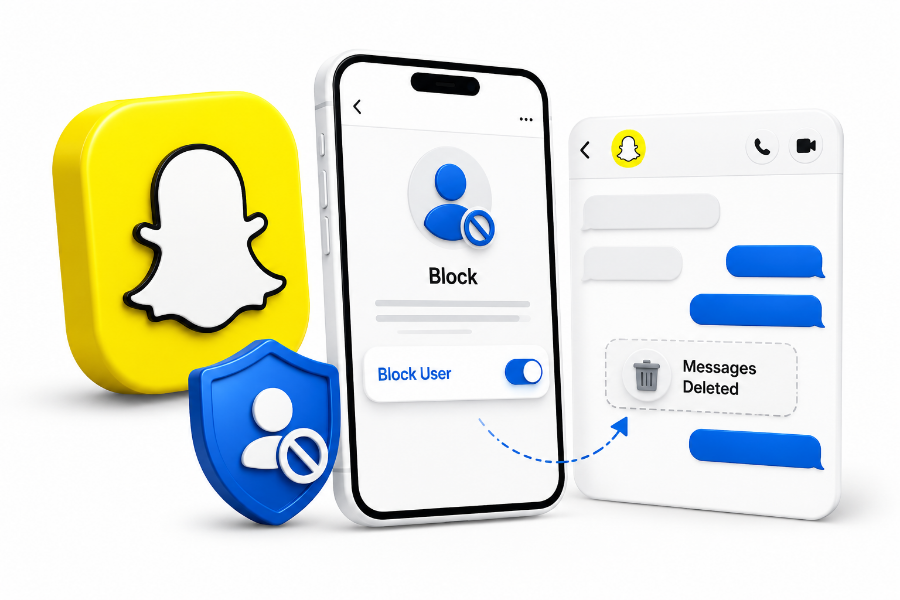
What happens when you block someone on Snapchat is important for managing privacy and digital communication. Many users assume blocking instantly removes all past conversations, but the reality is more nuanced.
On Snapchat, blocking affects future interaction, not always past data. This means chats, saved messages, and snaps behave differently depending on how they were stored before the block.
This guide explains exactly what disappears, what remains, and how Snapchat handles messages after a block so you can clearly understand your privacy control.
What Blocking Actually Does on Snapchat
When you block someone, Snapchat immediately cuts off all communication between both accounts. The blocked user can no longer send messages, view your profile, or see your stories.
However, blocking does not function as a full deletion tool for chat history. Instead, it restricts future interaction while leaving some existing data intact within the chat system.
This distinction is important because Snapchat is designed around both temporary and saved content, which behaves differently when a block occurs.
Do Messages Automatically Delete After Blocking
Blocking someone on Snapchat does not automatically delete messages from either side. Existing chats may still remain visible depending on what was saved before the block.
If messages were already saved in chat, they will typically remain visible even after blocking. If messages were not saved, they may disappear over time based on Snapchat’s auto-deletion rules or when the chat is cleared.
So the key point is that blocking stops communication, but it does not guarantee full message removal.
What Happens to Saved Chats and Snaps
Saved messages behave differently because they are stored intentionally within the chat. If you or the other person saved a message, it usually remains accessible even after a block.
Snaps, on the other hand, are designed to disappear after viewing or expiration. If a snap was already opened or expired before blocking, it cannot be recovered through the block action.
This means blocking does not override saved content or already delivered ephemeral snaps.
Chat History Visibility After Blocking
After blocking, the chat thread may still appear in your conversation list, but it becomes inactive. You cannot send new messages, and the blocked user disappears from your contact interactions.
In some cases, the chat may disappear from recent conversations depending on app updates or whether the conversation is cleared manually.
However, blocking alone does not guarantee permanent removal of chat history from your device unless you manually delete the conversation.
Difference Between Blocking and Removing a Friend
Blocking is stronger than removing a friend because it prevents all forms of interaction. Removing a friend only limits certain features, while messages and visibility may still remain depending on privacy settings.
Blocking cuts communication completely but still does not act as a full data wipe. Removing a friend simply changes your connection status without restricting access entirely.
This difference helps users choose the correct privacy action based on their goal.
What the Other Person Sees After Being Blocked
When someone is blocked, they lose access to your profile, Bitmoji updates, and story content. From their perspective, your account may appear unavailable or disappear entirely from search.
However, they may still see previously saved chat content unless they manually delete it. Snapchat does not forcibly erase saved messages from the other user’s device.
This is why blocking is more about future access control rather than retroactive content removal.
Can You Recover Messages After Blocking
Once a block is applied, you cannot retrieve new messages from that conversation. However, previously saved chats may still exist unless deleted manually.
If both users did not save the messages and they were already delivered long ago, Snapchat’s auto-delete system may already have removed them before the block occurred.
Blocking does not create a backup or restore function for chat history.
How to Fully Remove Chat History
If your goal is to completely remove messages, you need to manually delete the conversation before or after blocking. This ensures that your device no longer stores the chat thread.
You can also use the “Clear Conversation” option to remove chat history from your feed. This only affects your side and does not delete messages from the other user’s account.
For full privacy control, combining blocking with manual chat deletion is the most effective method.
Privacy Behavior of Snapchat Messages
Snapchat is designed around temporary communication, but not all messages behave the same. Some disappear automatically, while others remain saved if either user chooses to keep them.
Blocking only affects interaction permissions, not stored data rules. This is why messages may still exist even after a user is blocked.
Understanding this system helps avoid confusion about missing or still-visible conversations.
Common Misconceptions About Blocking
Many users believe blocking erases everything instantly, but Snapchat does not function this way. Saved messages, screenshots, and device-stored data are not affected by blocking.
Another misconception is that blocking deletes messages from both sides. In reality, each user controls their own saved data independently.
Because of these differences, blocking should be seen as a privacy barrier, not a deletion tool.
Safe Ways to Protect Your Snapchat Privacy
If your goal is privacy, blocking alone is not enough. You should also review chat settings, delete conversations, and control who can contact you.
Adjusting who can send snaps, view stories, and find your profile helps reduce unwanted interactions.
Combining these settings gives you stronger control over your digital presence.
Recommended privacy actions
- Block users you no longer want contact with
- Clear conversation history from chat feed
- Adjust who can send you snaps and messages
- Limit story visibility to friends only
- Review saved chats regularly
- Disable quick add if needed for privacy
Business and Personal Usage Differences
For casual users, blocking is usually enough to stop communication. For creators or business accounts, understanding message behavior is important for managing customer interactions.
Some businesses prefer to archive or clear conversations instead of blocking to maintain records. Others use blocking to handle spam or unwanted contact.
Choosing the right action depends on whether communication history is still needed.
Conclusion
Understanding when you block someone on Snapchat do the messages delete comes down to how the platform handles data. Blocking does not automatically remove messages; it only stops future communication.
Saved chats may remain visible, while unsaved or expired snaps follow Snapchat’s normal deletion rules. For complete privacy, combining blocking with manual chat deletion is the most effective approach.
FAQ’S
Do messages disappear when you block someone on Snapchat
No, blocking does not automatically delete messages. Saved chats may still remain visible, while unsaved messages may disappear based on Snapchat’s auto-delete system.
Can the other person still see old chats after being blocked
Yes, the other person may still see saved or previously stored chats unless they manually delete them from their side. Blocking does not erase their data.
Does blocking delete snaps already sent
No, snaps that were already viewed or expired are not affected by blocking. Snapchat does not restore or delete past snap content through blocking.
Is blocking the same as deleting conversation
No, blocking only prevents future communication. Deleting a conversation removes the chat from your device but does not affect the other person’s saved messages.
What is the best way to remove all messages
To fully remove messages, you should both clear the conversation and block the user. This ensures the chat is removed from your side and prevents further contact.